
Public Board Meeting Agendas and the Sunshine Act in Weirton
In West Virginia, the relationship between government and the public is grounded in the Open Governmental Proceedings Act. Known as the “Sunshine Act” and codified in Article 9A of the West Virginia Code, this law affirms the public’s right to observe and evaluate the actions of its government.
The Act’s policy declaration states that, “public agencies in this state exist for the singular purpose of representing citizens of this state in governmental affairs”. To preserve that principle, the law requires the proceedings of public bodies be conducted openly.
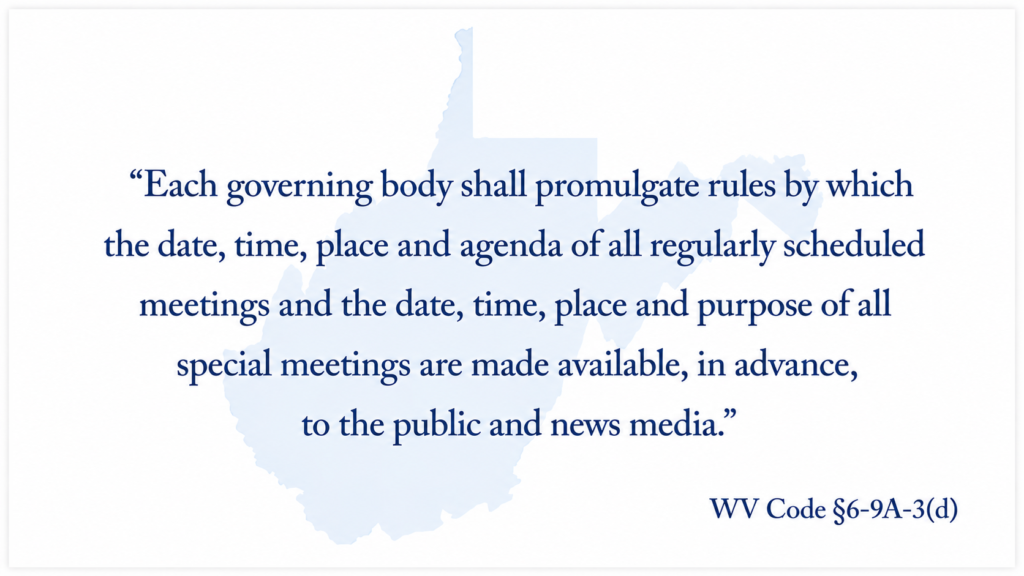
Under §6-9A-3(d), governing bodies must make the date, time, place, and agenda of meetings available to the public and news media in advance. This requirement is essential for meaningful civic participation and effective oversight. Public access to agendas allows residents to:
- Educate themselves on matters under consideration.
- Prepare informed comments for public sessions.
- Hold public officials accountable for the decisions made during these meetings.
The City of Weirton’s website lists 16 boards and commissions supporting key areas of local government, including public safety, planning, utilities, and community development. While the website features a centralized Agenda Center, the page is largely an abandoned civic tool that’s been stripped down to publishing City Council agendas. This raises an important question regarding how residents can access meeting agendas and remain informed about matters under consideration.
Bloodhound Media submitted an inquiry to the City Manager and Assistant City Manager to have a better understanding on the availability of agendas. The response can be broken into five groups:
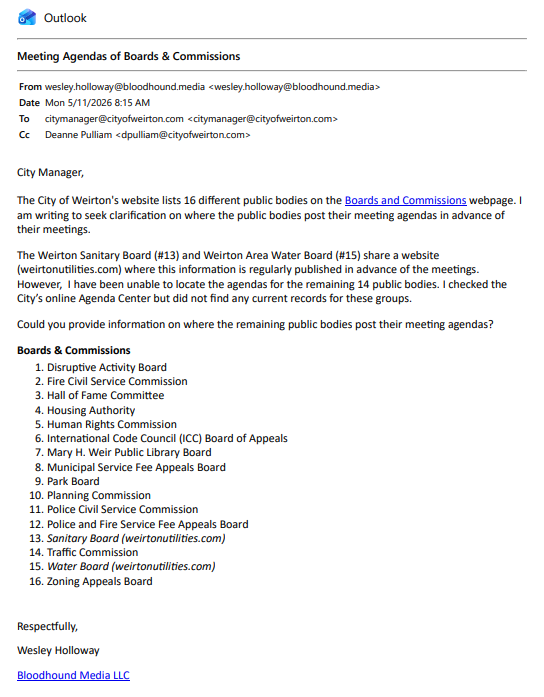
1. Physical Postings at the City Building
Meeting agendas for the Fire Civil Service Commission, Police Civil Service Commission, and the Traffic Commissions are physically posted on the front window of the City Building and the door of the designated meeting room.
2. Ad Hoc and Dormant Boards
Several boards convene strictly on an as-needed basis. The Disruptive Activity Board, the Municipal Service Fee Appeals Board, and the Police and Fire Service Fee Appeals Board have not met within the last ten years. Additionally, the International Code Council (ICC) Board of Appeals operates on an ad hoc basis and has not convened since its implementation in October 2024.
3. Autonomous Boards
The Housing Authority, Human Rights Commission, Mary H. Weir Public Library Board, Park Board, Sanitary Board, and Water Board were all noted as being autonomous or working independently from the City of Weirton. The response recommended contacting these public bodies separately.
4. Legal Advertisements and Notices to Adjacent Property Owners
Proceedings for the Planning Commission and the Zoning Appeals Board are communicated via legal advertisements and mailings to adjacent property owners. The response did not specify whether separate public agendas are compiled for these meetings or where they can be accessed.
5. Total Secrecy
The Hall of Fame Committee meets to evaluate nominations and organize a banquet. The City Manager noted that due to the specialized nature of these proceedings, the meetings are not conducted publicly, and agendas or notices are not posted.
While certain aspects of the Committee’s business, such as evaluating nominees, may qualify for executive session, residents should question whether portions of these meetings fall under the broader requirements of the Sunshine Act.
Although West Virginia code does not mandate meeting agendas to be published online, modern standards of transparency make digital accessibility a practical extension of the Sunshine Act’s purpose. Public participation cannot be meaningful if residents do not know when agendas exist, where to find them, or what issues are under consideration.
Transparency is not limited to the actions of City Council alone. For the Sunshine Act to function as intended, public boards and commissions must provide clear and consistent access to meeting information across all areas of local government. Ensuring consistent access to these agendas is a necessary step in guaranteeing that the citizens of Weirton retain meaningful oversight of the government established to serve them.